Advertorial

Trending in the Philippines
I Was Trapped on Minoxidil for 3 Years. Here's How I Finally Got Out — And Kept My Hair
The "rebound effect" nobody warns you about, and the two-front fix that finally worked.


I’m going to tell you something that took me three years and over ₱80,000 to learn the hard way.
Minoxidil is not a treatment. It’s a trap.
And if you’re using it right now or thinking about starting…
You need to read this before you make the same mistake I did.
My name is Marco. I’m 34, I work in sales, and I live in Quezon City. Three years ago, I noticed my hairline creeping back. The shower drain started catching more hair than usual. My barber asked if I wanted him to “blend the thin spot” at my crown.
That was the moment I panicked.
I did what most guys do. I Googled “how to stop hair loss” and fell straight into the Minoxidil rabbit hole.
Every forum, every Reddit thread, every YouTube dermatologist said the same thing: Minoxidil works. Just use it twice a day, every day, and your hair will grow back.
So I bought my first bottle. Applied it religiously. Morning and night, like clockwork.
And you know what? It worked.
For a while.

The First Six Months Felt Like a Miracle
I won’t lie to you… the results were real.
Around month three, I noticed baby hairs sprouting along my hairline. By month five, my crown looked noticeably fuller. I was taking selfies again. I stopped avoiding overhead lighting.
I thought I had solved it. I thought I was one of the lucky ones.
But here’s what nobody told me.
Minoxidil doesn’t fix anything. It forces your blood vessels open — artificially, temporarily — to push more blood to your scalp. The hair that grows is completely dependent on that forced blood flow.
The moment you stop, those vessels collapse back to normal.
And everything you grew? Gone. Often worse than before.
They call it the “rebound effect.” And I learned about it the hard way.

The Day I Missed a Week
It was December 2022. I flew home to Bicol for the holidays. In the rush of packing, I forgot my Minoxidil.
One week lang naman, I told myself. It’ll be fine.
It was not fine.
By day four, I noticed more hair on my pillow than usual. By day six, clumps were coming out in the shower. I panicked and cut my trip short, flew back to Manila, and immediately resumed my routine.
But the damage was done.
Over the next two months, I shed more hair than I had in the entire year before I started Minoxidil. My hairline didn’t just go back to where it was. It went past it. The thin spot at my crown turned into a visible bald patch.
I was devastated.
And the worst part? I couldn’t stop using Minoxidil. Because if I did, I’d lose even more.
Naging hostage ako ng sarili kong treatment.
The Trap Nobody Warns You About
After that disaster, I started researching. Really researching. Not the surface-level stuff, but the clinical studies, the dermatology journals, the honest conversations happening in hair loss communities.
What I found made me sick.
Minoxidil was never designed for hair loss. It was a blood pressure medication. Doctors noticed patients were growing hair as a side effect, so they repackaged it as a topical treatment.
But here’s the mechanism nobody explains clearly:
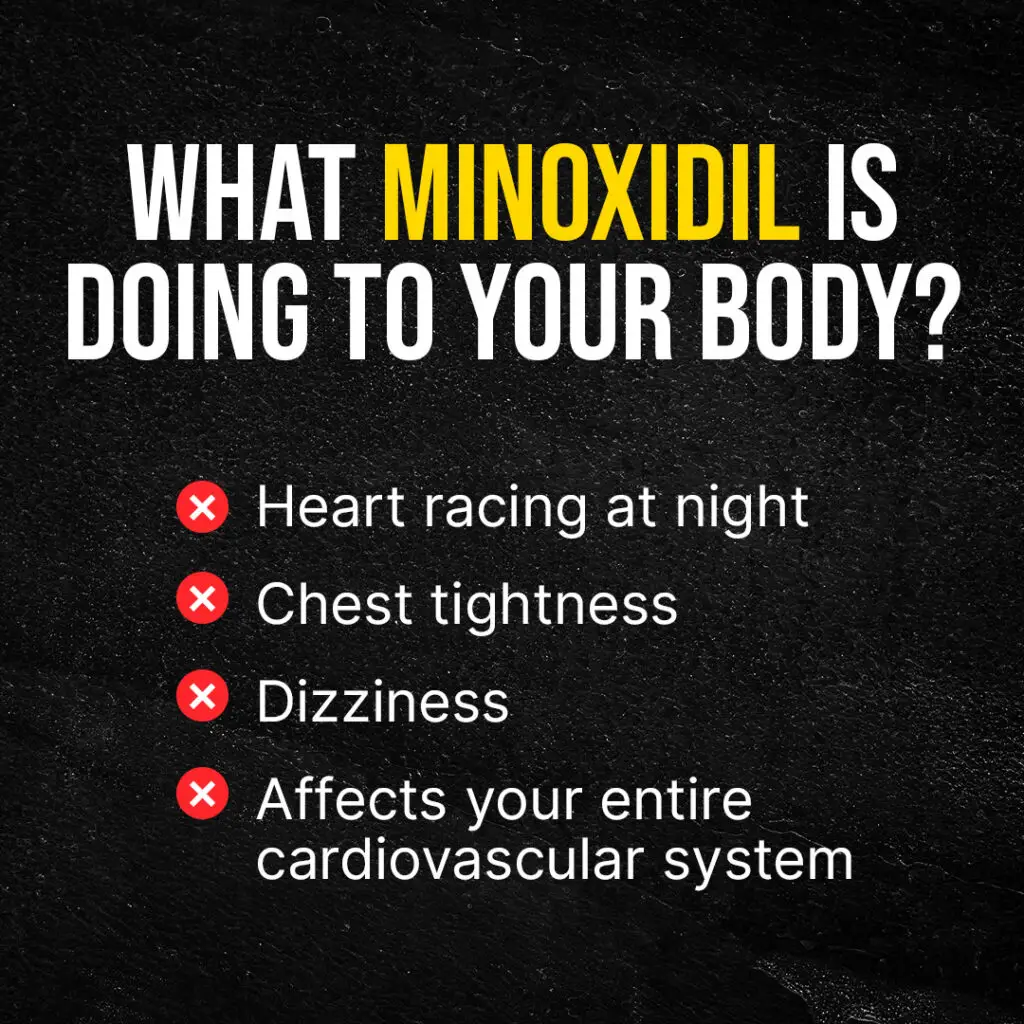
Minoxidil forces your blood vessels open throughout your body — not just your scalp. That’s why some users get heart palpitations, headaches, dizziness, and facial bloating. The drug doesn’t know to target only your head. It opens vessels everywhere.
And because that opening is artificial and drug-dependent, your body never learns to maintain it on its own.
So you’re not growing stronger hair. You’re growing drug-dependent hair. Hair that only exists because of the chemical forcing blood to your scalp.
Stop the chemical, lose the hair. Simple as that.
The companies know this. The dermatologists know this. But they don’t lead with it because… oh well, a customer trapped for life is a customer who keeps buying.
Hindi nila sasabihin sa’yo na lifetime contract yan.

Finasteride Was Even Worse
After the rebound disaster, I thought maybe I needed something “stronger.” So I asked my dermatologist about Finasteride.
She prescribed it without hesitation.
For those who don’t know, Finasteride is an oral pill that blocks DHT — the hormone that shrinks hair follicles. It’s effective for hair growth. The studies are clear on that.
But here’s what else the studies are clear on:
Finasteride messes with your hormones. And the side effects are not small.
We’re talking about reduced libido. Difficulty maintaining erections. Brain fog. Depression. Mood swings. Some men report these effects continuing even after they stop the drug — a phenomenon called Post-Finasteride Syndrome that researchers are still trying to understand.
I took Finasteride for four months.
During those four months, I noticed my drive dropping. My girlfriend noticed. I was irritable, foggy, and felt disconnected from my own body.
And for what? So I could keep hair that I’d lose anyway if I ever stopped?
I quit Finasteride and swore I’d never put another hormone-altering drug in my body for hair.
But that left me with nothing. Back to square one, with less hair than when I started.
The Question That Changed Everything
I spent weeks feeling hopeless. Scrolling through forums at 2 AM. Reading the same recycled advice. Minoxidil. Finasteride. Hair transplant. Repeat.
Then I stumbled on a comment buried deep in a thread. Some guy wrote something that stopped me cold:
“Hair loss isn’t one problem. It’s four. And you’re probably only fighting one of them.”
I’d never thought about it that way.
For three years, I’d been attacking my hair loss like it had a single cause. DHT. Just block the DHT and the hair comes back.
But this guy broke it down differently:
Problem 1: DHT attacking your follicles, shrinking them until they stop producing hair.
Problem 2: Poor blood circulation to the scalp, starving follicles of the nutrients they need.
Problem 3: Collagen hardening around the roots, loosening hair so it falls out before its time.
Problem 4: Weak keratin structure, making the hair you do grow thin and brittle.
Four problems. Four fronts.
And here I was, using Minoxidil which only addresses one of them. Circulation. That’s it.
No wonder my hair kept falling despite “treatment.”
I was fighting a four-front war with a single weapon.

The Search For Something That Actually Made Sense
Once I understood the four-front problem, I started looking for a four-front solution.
I went back through the research. Not the marketing, but the actual studies.
What I found surprised me.
On Rosemary Oil: A 2015 clinical study published in SKINmed Journal compared rosemary oil to 2% Minoxidil. 100 men. Six months. The result? Rosemary oil matched Minoxidil for hair regrowth with better scalp tolerance. Same results, no dependency.
On Caffeine: Multiple studies showed that caffeine, applied topically, blocks DHT directly at the follicle. Not systemically like Finasteride, just locally, where you need it. It also extends the hair growth phase and stimulates the hair matrix to produce thicker strands. Same DHT-blocking benefit. Zero effect on hormones.
On Kopexil: This one I’d never heard of. Pharmaceutical-grade, developed by L’Oréal, used in luxury brands like Kérastase. It works by preventing collagen hardening around the follicle root, the process that loosens hair and makes it shed prematurely. Instead of forcing growth like Minoxidil, Kopexil anchors hair naturally. No dependency. No rebound.
On Biotin: The building block for keratin, which is what your hair is literally made of. Most products sprinkle in tiny amounts for label appeal. But at therapeutic doses, biotin actually strengthens hair structure from the root up.
Four ingredients. Four mechanisms. Four fronts covered.
The question was: did anything combine all four?

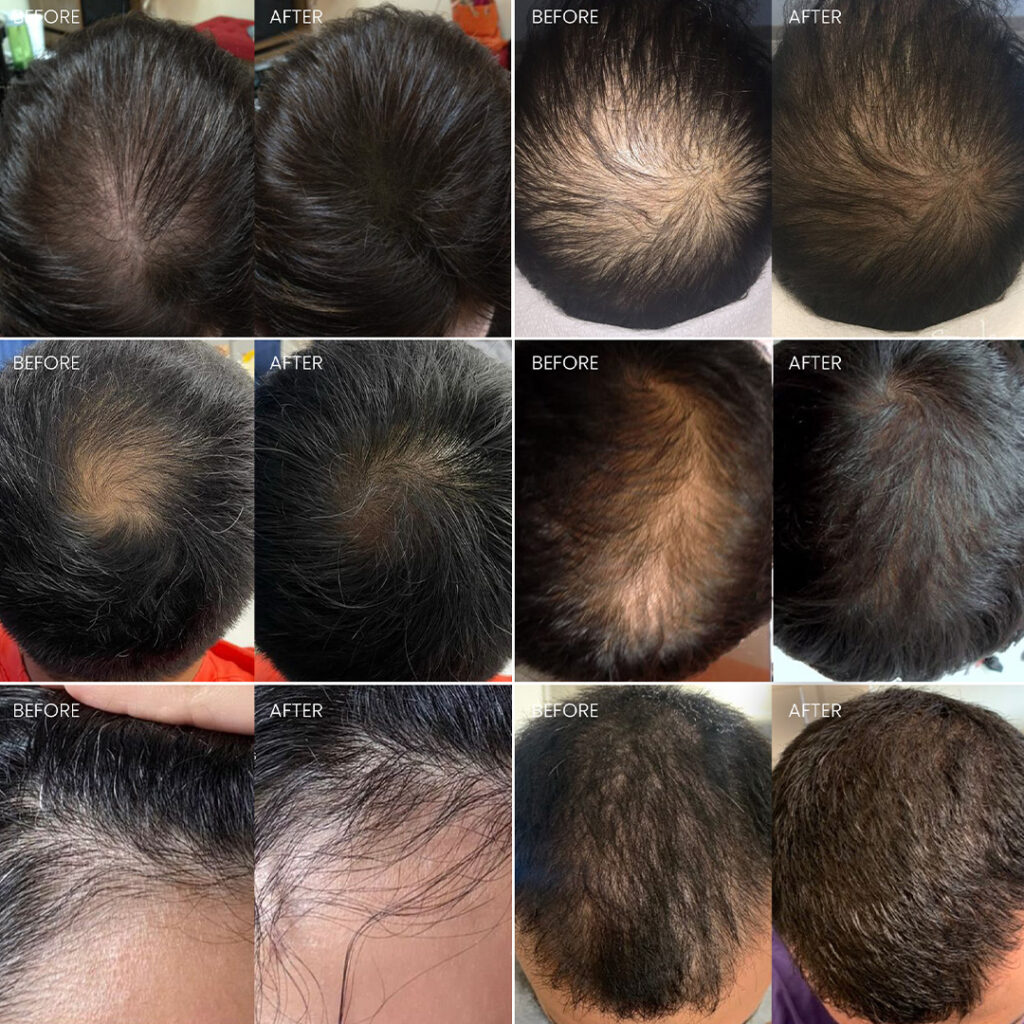
The Product I Almost Didn't Trust
I’d been burned too many times to trust marketing claims.
But when I found the Zenith Advanced Hair Density Spray, I did something I hadn’t done with any other product: I read the full ingredient list.
And there they were. All four.
Caffeine. Rosemary Oil. Kopexil. Biotin.
Not one. Not two. All four clinical-strength actives in one spray.
Zenith calls it CABROXIL Technology. And unlike single-ingredient products that leave you fighting with one hand tied behind your back, CABROXIL attacks hair loss through all four pathways simultaneously.
Pathway 1: Caffeine blocks DHT at the follicle — locally, without touching your hormones.
Pathway 2: Rosemary oil stimulates scalp circulation — same results as Minoxidil, zero dependency.
Pathway 3: Kopexil anchors hair by preventing collagen hardening — so hair stops shedding early.
Pathway 4: Biotin builds stronger keratin — so new growth is thick and healthy, not weak and wispy.
Plus supporting ingredients I hadn’t expected: Batana and Castor Oil to strengthen the hair fiber. Saccharomyces Rice Ferment Filtrate for scalp health. All designed for the Philippine climate — lightweight, non-greasy, doesn’t make your hair look oily in our humidity.
I was skeptical. But three things pushed me to try it:
One: It was completely drug-free. No Minoxidil. No Finasteride. No hormones. If the ingredients didn’t work, at least they wouldn’t damage me.
Two: It was designed specifically for Filipino men. Our climate, our scalps, our conditions. Not some Western formula repackaged with a Tagalog label.
Three: It had a 30-day money-back guarantee. If it didn’t work, I’d get my money back. No questions.
I ordered a bottle and started using it that night.

Week One: The Application Changed Everything
The first thing I noticed wasn’t about hair. It was about the experience.
Minoxidil is a mess. Greasy. Sticky. Stains your pillowcase. Makes your hair look wet and stringy all day. You feel like you’re wearing product even when you’re supposed to be done.
The Zenith spray was nothing like that.
Water-based. Fine mist. I sprayed 3-5 times on my thinning areas, massaged for 30 seconds, and it absorbed almost instantly. No residue. No grease. No stained pillows.
I could apply it at night and wake up with clean, dry hair. I could apply it in the morning and head to a client meeting without looking like I just stepped out of the shower.
For a guy who spends half his day in presentations and the other half on Zoom calls, that mattered more than I expected.
My scalp also felt different. Calmer. Less itchy. Minoxidil always left this tight, dry, irritated feeling. Zenith felt like it was actually soothing my scalp while treating it.
Small thing. But it made me want to keep using it.

Weeks Two to Four: The Drain Told The Story
Here’s what every guy with hair loss does: we count.
We count the hairs in the drain. On the pillow. On our hands after running fingers through our hair. We don’t want to count. We can’t help it.
Before Zenith, I was seeing 50, 60, sometimes 80 hairs after every shower. A daily reminder that I was losing ground.
By week two, the number dropped. Noticeably.
By week three, I had to actually look for hair in the drain. It wasn’t jumping out at me anymore.
By week four, I stopped counting. Because there wasn’t enough to count.
I know it sounds small. But if you’ve watched your hair fall out for years, the moment it stops falling out… hindi ko kayang ipaliwanag yung relief.
I wasn’t growing new hair yet. But I wasn’t losing the hair I had. For the first time in three years, I was holding ground.

Weeks Six to Eight: The Mirror Finally Showed Something Good
I’d been avoiding certain angles for years.
The overhead bathroom light that showed my crown. The rearview mirror when the sun hit wrong. Photos where someone stood taller than me and looked down.
Around week six, I noticed something different in the mirror.
My hairline, the area that had been receding the most… had these tiny hairs coming in. Not peach fuzz. Actual hair. Short, but dark. Visible.
By week eight, my wife noticed without me saying anything.
“Parang dumami ang hair mo,” she said while we were getting ready for a company dinner. Casual. Like an observation.
I played it cool. But inside, grabe yung saya.
My barber confirmed it the next week. Said my crown looked fuller than it had in years. Asked what I was using.
For three years I’d been fighting this losing battle. Using drugs that trapped me. Worrying about side effects that could end my career. Spending money on things that didn’t work.
And here was a spray, drug-free, applied in just 30 seconds before bed and doing what nothing else could.

Why CABROXIL Works When Everything Else Fails
Let me explain this simply, because it took me months to understand.
Minoxidil forces your blood vessels open artificially. That’s why it causes heart palpitations and scalp irritation… and it affects your cardiovascular system, not just your scalp. And the moment you stop forcing those vessels open, they collapse. Everything you grew falls out. You’re trapped forever.
Finasteride blocks DHT throughout your entire body. That’s why it causes erectile dysfunction, brain fog, and depression. Because DHT does important things beyond hair. You’re trading your performance for your hairline.
Hair transplants move hair from the back of your head to the front. But they don’t address why you were losing hair. The DHT, the poor circulation, the collagen hardening is still there. Many men need a second transplant within five years. You paid ₱150,000 to move the problem, not solve it.
Single-ingredient products… Because relying on rosemary oil, caffeine shampoo, or biotin supplements alone… you are only fighting one side of a four-way battle. It’s like fixing one leaky pipe while three others keep cracking.
CABROXIL is different because it fights all four fronts simultaneously:
- Blocks DHT locally at the follicle
- Stimulates circulation naturally
- Anchors hair by preventing collagen hardening
- Builds stronger keratin structure
That’s why nothing else worked for me. That’s why Zenith did.
The Real Cost Of Every Option
Let me break this down as a professional who tracks ROI on everything.
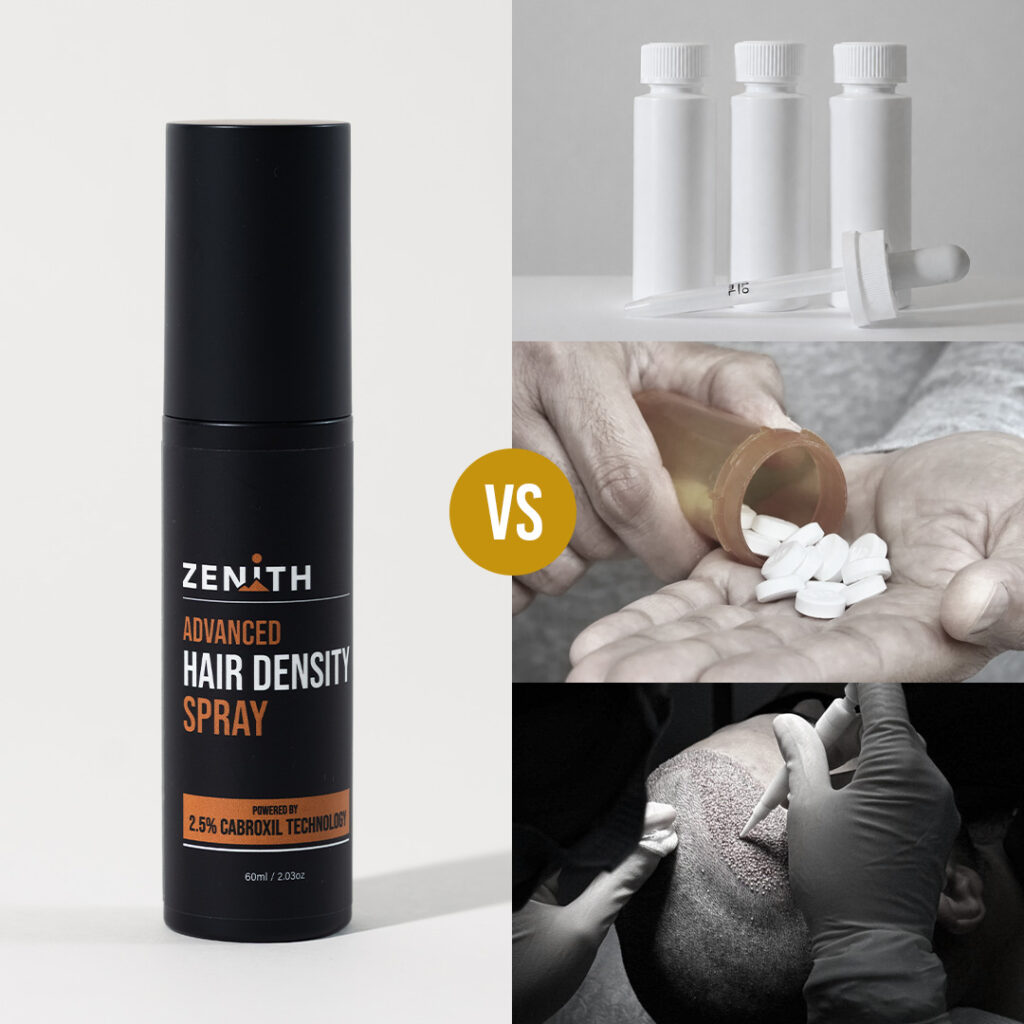
Minoxidil: ₱600-800 per month. Forever. That’s ₱7,200-9,600 per year for life. Plus the rebound trap, stop paying and you lose everything. Total cost over 10 years: ₱72,000-96,000. And you never actually own your hair.
Finasteride: ₱1,500-3,000 per month including doctor visits and blood work. Plus the risk of side effects that could cost you your career, your relationship, your mental health. What’s the ROI on brain fog in a board meeting?
Hair Transplant: ₱150,000 and up. Surgery. Recovery time. Missed work. And you’ll probably need another one in five years because it doesn’t fix the underlying cause.
Zenith: ₱1,799 per bottle. One bottle lasts about a month. No subscription trap. No dependency. If it doesn’t work, you get your money back within 30 days.
The math isn’t even close.
What Happens If You Stop?
This was my biggest fear with Minoxidil. The rebound effect. Stop using it and everything falls out… and often worse than before you started.
I asked this same question about Zenith before I bought it.
Here’s the difference:
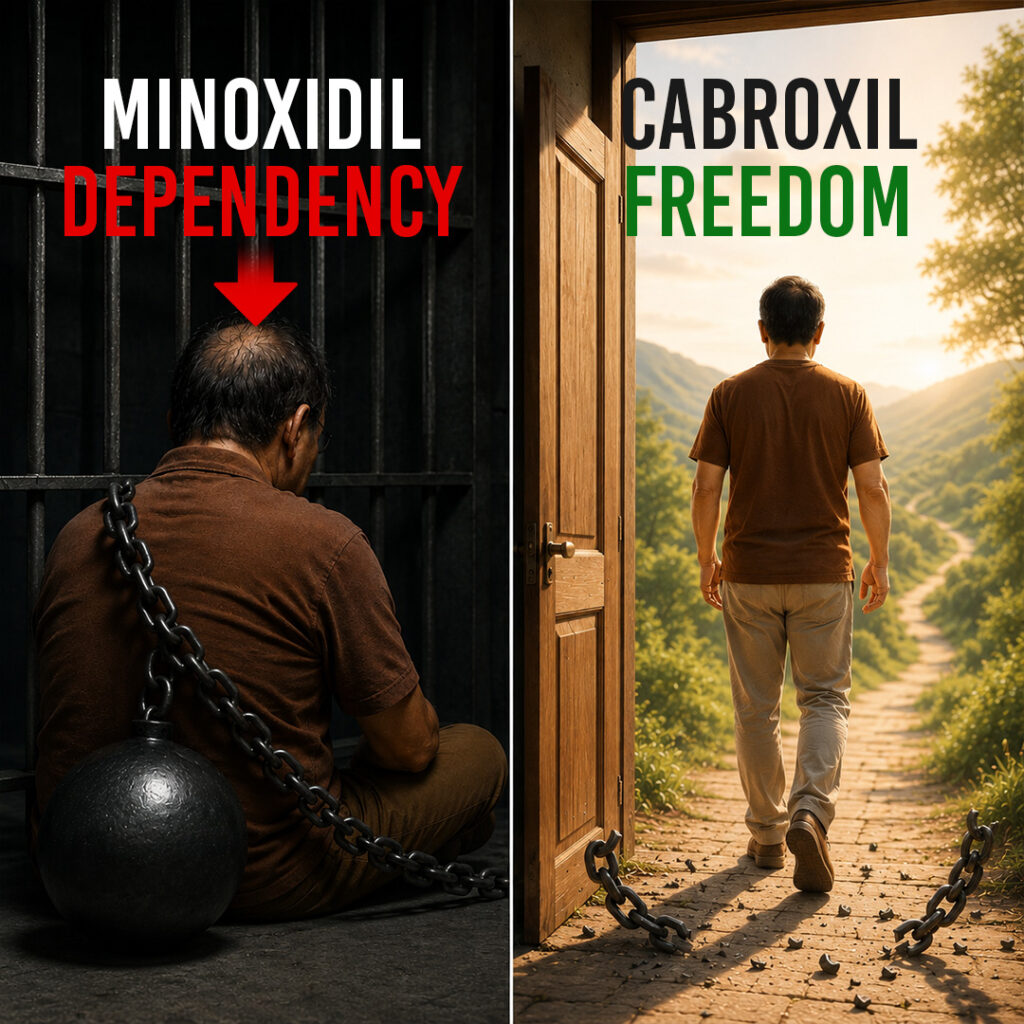
Minoxidil forces artificial dependency. Your follicles only survive because of the drug. Take away the drug, they collapse.
CABROXIL strengthens your natural hair mechanisms. The Kopexil anchors hair naturally. The caffeine and rosemary improve scalp health. The biotin builds stronger structure.
You’re not renting your hair. You’re repairing the system that grows it.
If you stop using Zenith, you don’t experience devastating rebound loss. Your follicles are actually healthier than when you started. Some men maintain their results for months after stopping. Others continue using it because the routine is easy and the results keep compounding.
But you’re not trapped. You’re not scared. You’re not a hostage.
That freedom is worth more than the hair itself.

The Question You Need To Ask Yourself
I spent three years fighting hair loss the wrong way.
Drugs that trapped me. Treatments that risked my health. Products that only fought one of four problems.
If I’d found CABROXIL earlier, I’d have more hair, more money, and three fewer years of stress.
Here’s what I know now:
Hair loss isn’t one problem. It’s four. And any solution that doesn’t address all four is just delaying the inevitable.
You don’t have to choose between your hair and your health. You don’t have to be trapped for life. You don’t have to spend ₱150,000 on a surgery that doesn’t fix the cause.
Limited Time Offer — Up to 66% Off
The Zenith Advanced Hair Density Spray is on sale right now.
One bottle. Enough for a month of daily use.
30-day money-back guarantee. If you don’t see less shedding, if your scalp doesn’t feel healthier, if there’s no sign of new growth… you get every peso back. No questions.
Free shipping.
Every week you wait, more hair falls. More follicles weaken. The problem compounds.
I wish I’d found this three years ago.
You’re reading this now. You don’t have to wait.